.jpeg)
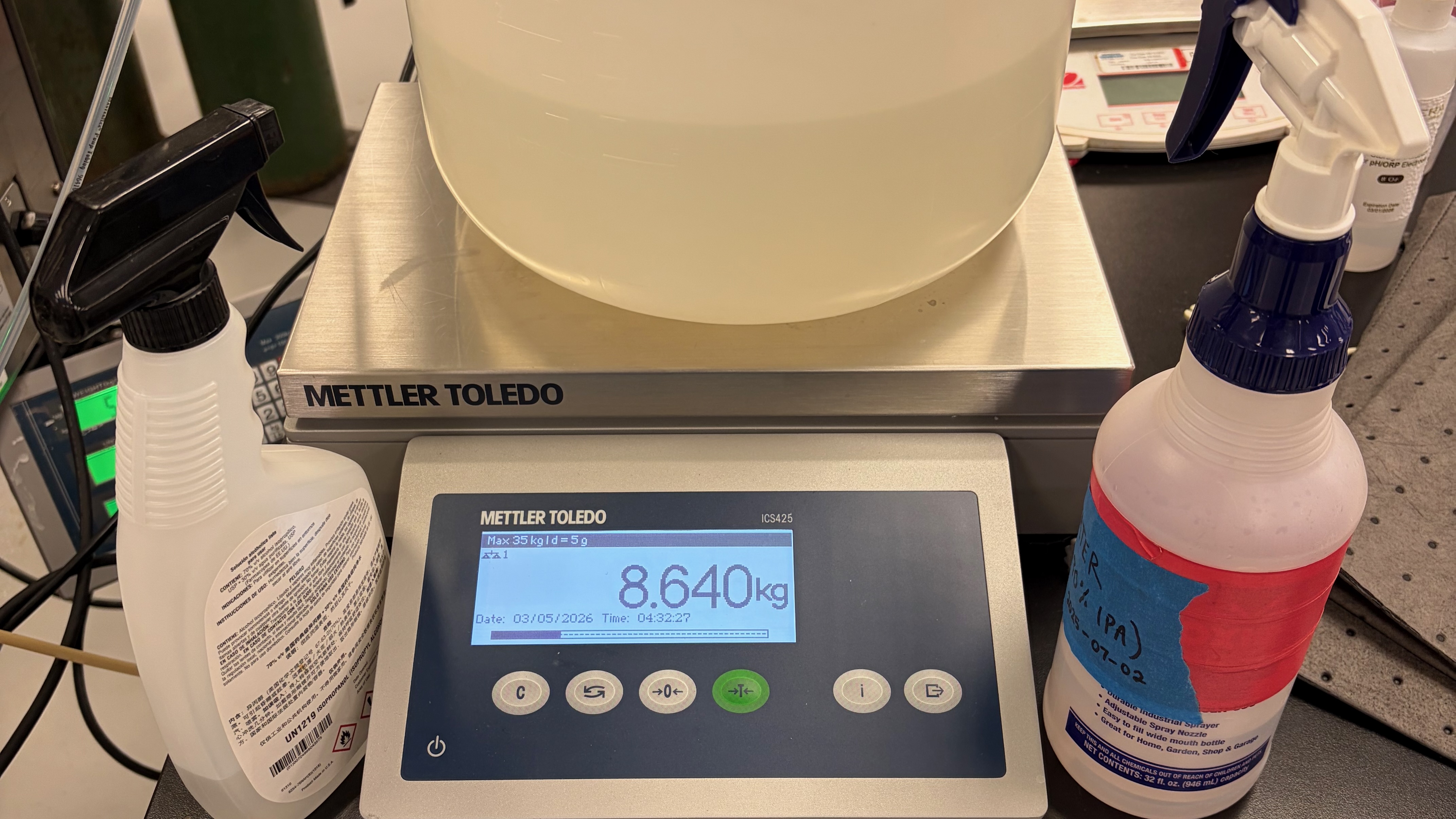
When you need to precisely control a particular feed during fermentation, use gravimetric (weight-based) feeding.
Peristaltic pumps are the industry standard for fluid transfer and feeding at bench and pilot scale. One of their key advantages is that the fluid only comes into contact with the tubing (not the pump itself), which eliminates cross-contamination and helps ensure a sterile environment in the fermenter.
Many peristaltic pumps have a useful feature called a totalizer, which provides the cumulative volume of fluid transferred over time. Totalizers enable volumetric feeding during a fermentation - you can monitor the raw values or plot the trendline to figure out feed rates. Totalizers calculate cumulative volume by multiplying a calibrated volume-per-revolution by the total number of pump revolutions.
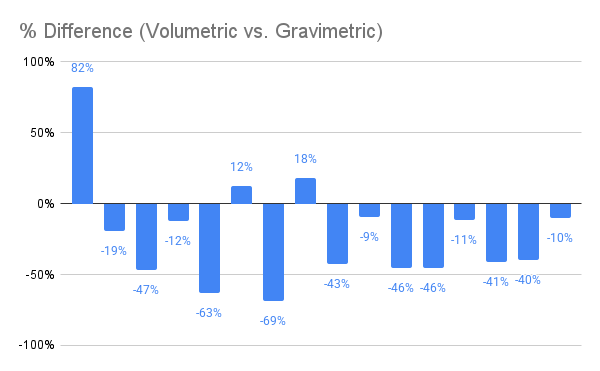
The problem with totalizers is that when operating under real-world conditions, they often deviate from the “true” volume, and sometimes by a significant percentage (see the chart below). You may see batch-over-batch variability that is due to a measurement issue, not a process issue. Common root causes include:
These root causes can compound on one another, making volumetric feeding increasingly unreliable as equipment ages or process conditions change.
Depending on the specific details of your process, the impact of overfeeding or underfeeding may range from minor to severe. On the minor side, slightly overfeeding a carbon source such as glucose or glycerol may result in a less efficient fermentation. On the severe side, significantly overfeeding an inducer such as methanol may lead to toxicity and cell death. In either case, if the over or underfeeding is a measurement artifact rather than a true process variable, it becomes very difficult to diagnose and even harder to fix.
GCB uses gravimetric feeding for critical feeds such as carbon sources and inducers. By placing feed vessels on calibrated scales and tracking mass over time, we measure what is actually being fed (independent of pump speed, backpressure, air bubbles, or equipment wear).
Gravimetric feeding can be further complemented by offline analytics. By measuring residual glucose, glycerol, or methanol during a batch, we can increase or decrease a feed rate in real-time based on what is actually happening in the fermenter.
When controlling pH via base additions, gravimetric feeding is useful but not typically required. A well-calibrated, automated pH controller can maintain the setpoint reliably on its own. You can then measure the starting and ending mass of base offline for batch-over-batch comparisons. When the rate of base consumption is a key in-process indicator, gravimetric feeding is recommended.
By combining gravimetric feeding with offline analytics, GCB runs precisely controlled processes and delivers valuable, actionable insights to understand and continuously improve your fermentation.
Chart 1: Percent difference between volumetric and gravimetric data